Encyclopedia
De Wallen: what it was and what became of it
Amsterdam's red-light district from medieval port to Project 1012: the 2000 brothel law, the tour ban, 2023's closing hours and the shelved erotic centre.
7 min read
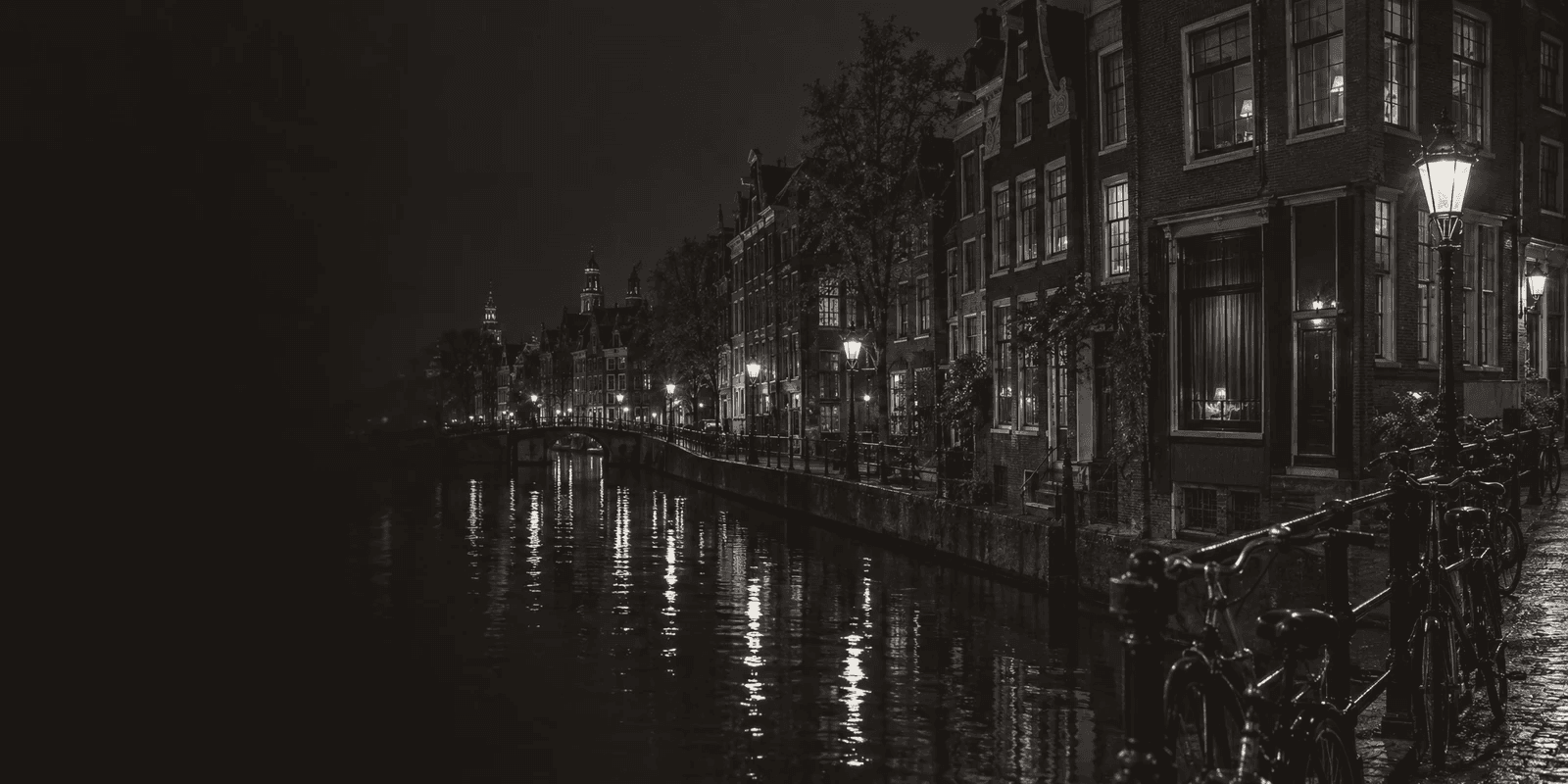
De Wallen began as the harbour quarter of a medieval port and has been where Amsterdam keeps its sex trade for roughly as long as there has been an Amsterdam. What became of it is a slow municipal campaign to make the district smaller, quieter and less of a spectacle: brothels legalised in 2000, buildings bought up under Project 1012 from 2007, tours banned in 2020, earlier bar closing in 2023, and an erotic centre that was planned and then reportedly shelved in 2026. The windows are still there. Fewer of them, and watched more closely than ever.
Where De Wallen comes from
The name is a description of the map. The wallen were the ramparts along the old canals, and the district’s spine is still two of them, the Oudezijds Voorburgwal and the Oudezijds Achterburgwal, with the Zeedijk running along the edge where the sea wall used to be. The glossary entry dates the building-up to the fourteenth century, around the port.
A port means sailors, and sailors mean what sailors have always meant. The trade is documented in the quarter from the same century, close to the harbour and in the shadow of the Oude Kerk, the city’s oldest surviving building. A church and a red light on the same square is not an irony the district invented for tourists. It is simply where both of them were needed.
The city’s attitude moved in long swings. Medieval Amsterdam tolerated and regulated. After the Protestant takeover of 1578, the Alteration, the official line hardened, and the practice carried on behind it. That gap between what the law said and what the street did would turn out to be the most durable thing in the district.
Windows, and the long Dutch habit of tolerance
The Netherlands banned brothels nationally in 1911. Selling sex itself was not made a crime, but running a house was, and in Amsterdam the business adapted. Women rented rooms on the ground floor and stood or sat at the window, which turned a building into a shop front and the worker into her own landlord’s tenant. Exactly when the window became the district’s signature form is harder to date than the guidebooks admit; it spread through the twentieth century and was the defining picture of the Wallen by the 1970s.
For decades the arrangement ran on gedogen, the Dutch policy of formally forbidding something and declining to enforce the ban. Brothels were illegal and visible. Coffeeshops, which arrived later, worked the same way. You can admire the pragmatism and still notice that a grey zone is also where criminal money is most comfortable.
2000: the brothel ban is lifted
On 1 October 2000 the Netherlands lifted the general ban on brothels. The point was to separate voluntary sex work between adults, which would now be licensed, from coercion and trafficking, which would be prosecuted harder. Municipalities became responsible for permits.
In Amsterdam that meant the windows became licensed businesses. Operators hold the permit; the women rent a window, usually by the shift, and work as self-employed. The city has since raised the minimum age for window work to 21. A national bill to register sex workers and regulate the sector more tightly has been in Parliament for years and, as far as we can confirm, is still not law.
Legalisation did not end the argument. It changed its terms. Within a few years the question in the city council was no longer whether the windows were lawful but who owned the buildings they sat in.
Project 1012: the city buys the street
Project 1012, named after the district’s postcode, was launched in 2007 under alderman Lodewijk Asscher and mayor Job Cohen. Its stated aim was to break the link between the old centre’s cheap economy, windows, coffeeshops, peep shows and souvenir shops, and organised crime. Its method was mainly property.
The city and housing corporations bought buildings from window operators, including a large portfolio from one of the district’s best-known owners in 2007, and closed the windows inside them. A law that lets authorities refuse or revoke permits on integrity grounds, known as Bibob, was used to push out operators the city considered unsuitable. Some of the empty windows were handed to young fashion designers and artists, which produced a few years of very photogenic shop fronts and a lot of debate about whether a frock in a window was really a reform.
The original ambition was to cut the number of windows roughly in half. The real reduction was substantial but smaller than planned, and the exact count depends on which year and which source you take, so we will not pretend to one. What is not in dispute is the direction: fewer windows, more of them in buildings the city could control.
Critics pointed out the obvious. Fewer windows meant higher rents and fewer places to work, and sex workers’ groups argued that the policy treated them as the problem it was meant to solve. The bronze statue Belle, placed beside the Oude Kerk in 2007 with the inscription “Respect sex workers all over the world”, is the district’s quiet reply. It went up the same year the buying began.
Crowds, tours and the 2023 measures
By the 2010s the pressure on the district had less to do with crime than with numbers. The Wallen is a few narrow canal streets, and on a Saturday night it was holding crowds it was never built for, many of them looking rather than doing anything else. Residents complained; so did the women in the windows, who found themselves photographed like a museum exhibit.
Mayor Femke Halsema’s administration answered in stages:
- April 2020: guided tours past the windows in the red-light district were banned. Photographing the workers was already forbidden.
- March 2023: the city ran an online “Stay Away” campaign aimed at young British men planning a weekend of excess.
- 2023: bars and restaurants in the district closed at 2 a.m. at weekends from 1 April, and from May smoking cannabis on the street was banned. A 3 a.m. closing time for the windows was introduced too, then scrapped in February 2024 after a study found lost income and safety risks.
A separate proposal to bar foreign tourists from the city’s coffeeshops was floated and argued over but, to our knowledge, not put into effect in Amsterdam.
The point of all of this, plainly, is behavioural. The city is not trying to abolish the windows with these rules. It is trying to make the district less attractive as a place to drink, smoke and stare, and to leave the trade itself in quieter streets. Whether visitors read the hint is another matter. If you want the unwritten version of the same rules, the etiquette guide covers why the camera stays in the pocket.
The erotic centre, and the 2023 debates
The larger idea is to move part of the trade out of the old centre altogether. In 2019 Halsema set out several scenarios for the future of window work, from keeping it as it was to closing the windows; by 2021 the favoured option was a purpose-built erotic centre elsewhere in the city, with rooms for sex work alongside entertainment and hospitality.
The site was the problem. When candidate locations were named in 2023, each one drew organised opposition from the people who would live next to it. The European Medicines Agency, whose headquarters sit near one proposed site in the south of the city, objected publicly. Sex workers’ organisations objected too, from the other side: many did not want to leave the Wallen, where the foot traffic and the safety of a busy street are part of how the work stays manageable. A plan meant to protect them had to be argued past them.
The debate dragged on for years until, in May 2026, the new city coalition reportedly dropped the large centre; it now says it will look at smaller locations instead.
What De Wallen is now
As far as we can be certain, at the time of writing: the windows on the Oudezijds Achterburgwal and the streets around it are still open, still licensed, and fewer than they were before 2007. The earlier weekend closing for bars and the street cannabis ban remain, as far as we can confirm; the 3 a.m. window curfew was dropped in 2024. Tours do not pass the windows. No erotic centre has opened.
The district is, in other words, what it has been since the fourteenth century: a port quarter where the city keeps something it has never quite decided how to feel about, and regulates a little harder each decade. The fiction on this site has one foot there too; Esmée is an invented Amsterdammer, not a guide to the Wallen. For the long view of how the money in this world moved off the street and onto a screen, read the history of the webcam.
Frequently asked questions
- Is prostitution legal in De Wallen?
- Yes. Sex work between adults has not been a crime in the Netherlands for a long time, and the general ban on brothels was lifted on 1 October 2000, which let municipalities license and regulate them. In Amsterdam the windows are licensed businesses, the workers rent them and work for themselves, and the city sets the minimum age for window work at 21. Anyone working outside the licensing rules, or anyone exploiting someone else, is still breaking the law.
- Can you still take a guided tour of the red-light district?
- Not past the windows. Since April 2020 Amsterdam has banned guided tours that pass the windows in the red-light district, after years of complaints about crowds stopping in front of them. Tours of the wider old centre still run on other routes. Photographing or filming the women in the windows is forbidden regardless, and it is enforced by the workers themselves as much as by anyone in uniform.
- Has the erotic centre been built?
- No, and it now looks unlikely to be. The plan to move part of the window trade into a purpose-built erotic centre outside the old centre was debated from 2021, and candidate sites drew objections from residents, from the European Medicines Agency near one of them, and from sex workers who did not want to be moved. In May 2026 the city coalition reportedly dropped it in favour of exploring smaller locations. The windows on the Wallen are still in use.
- Can you smoke cannabis on the street in De Wallen?
- No. From May 2023 smoking cannabis in public in the red-light district was banned, as part of a package that also brought earlier weekend closing for bars. Coffeeshops in the district remain open; the ban covers the street, not the shop.